Digital learning portfolio case study

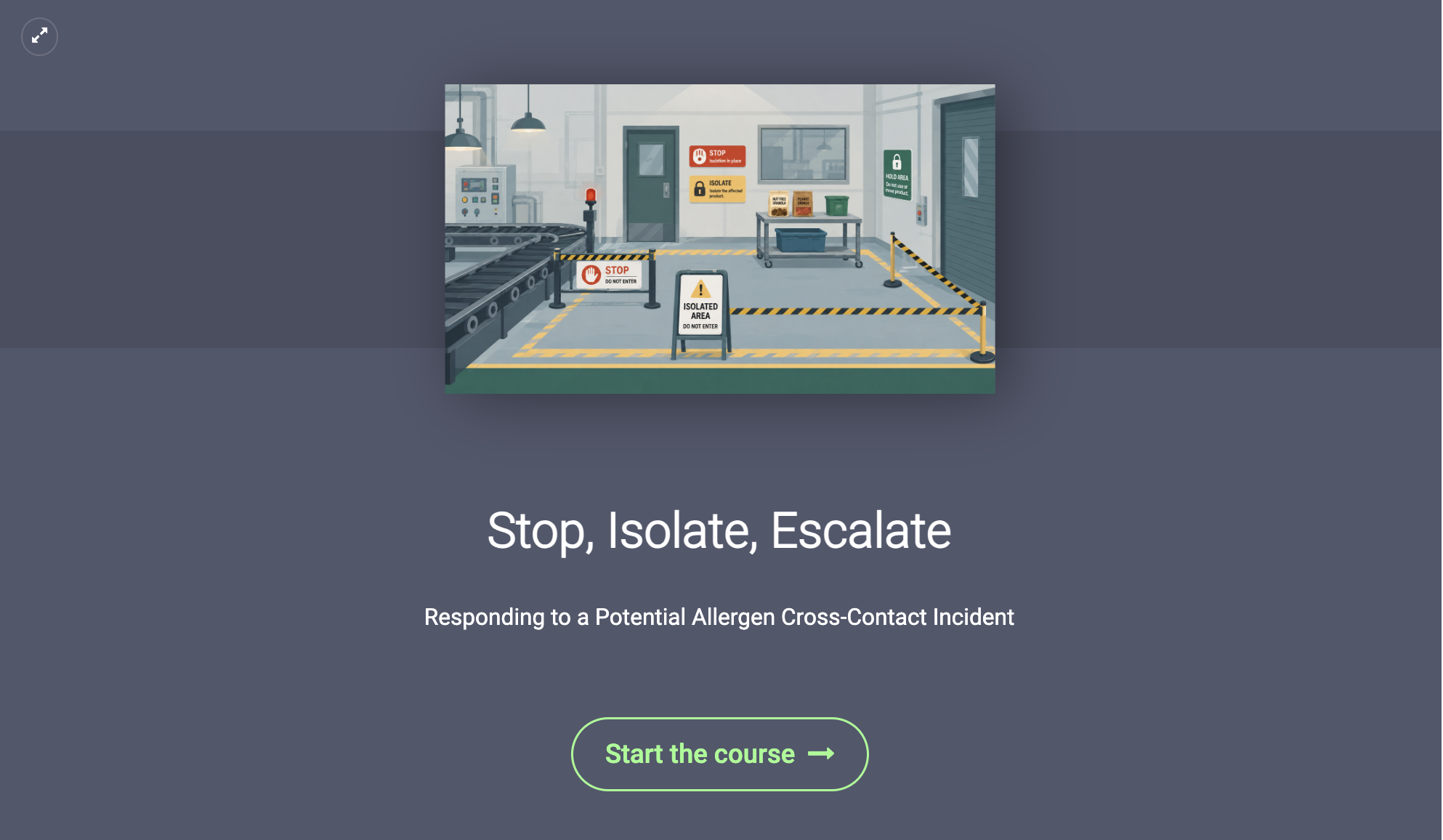
Stop.
Isolate.
Escalate.

Responding to a Potential Allergen Cross-Contact Incident

A mobile-first, scenario-based microlearning concept designed to help new food-production employees act quickly, communicate clearly and avoid unsafe or unauthorised responses.

Independent portfolio concept. This prototype was not built or administered in Canvas and is not an official AsureQuality product.

01 · Interactive prototypes

Try the learning product.

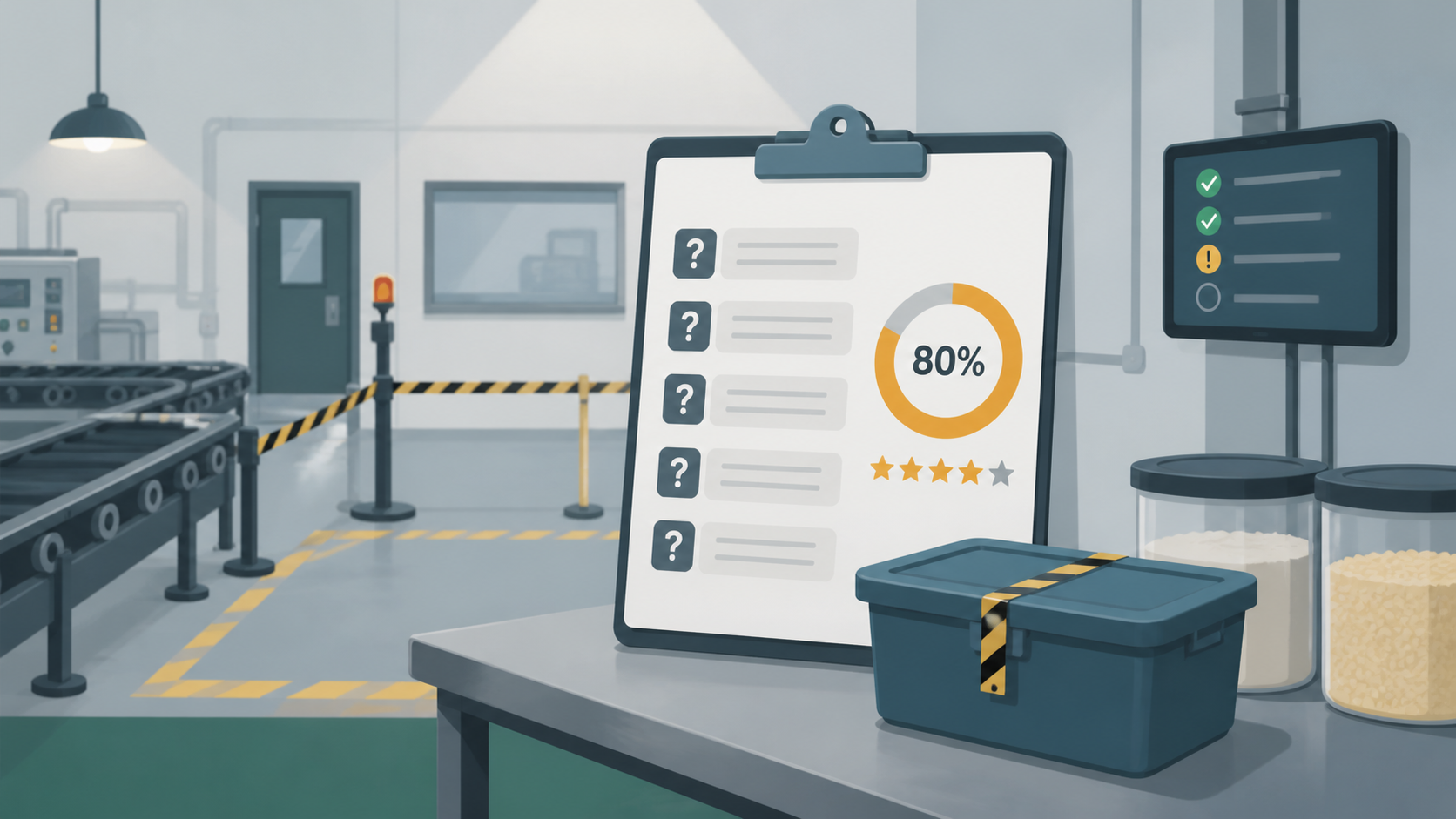
The branching scenario supports practice and consequence-based feedback. The separate final check provides a clear mastery decision.

02 · Verified evidence · SCORM Cloud · 19 August 2026

Two attempts show the mastery boundary.

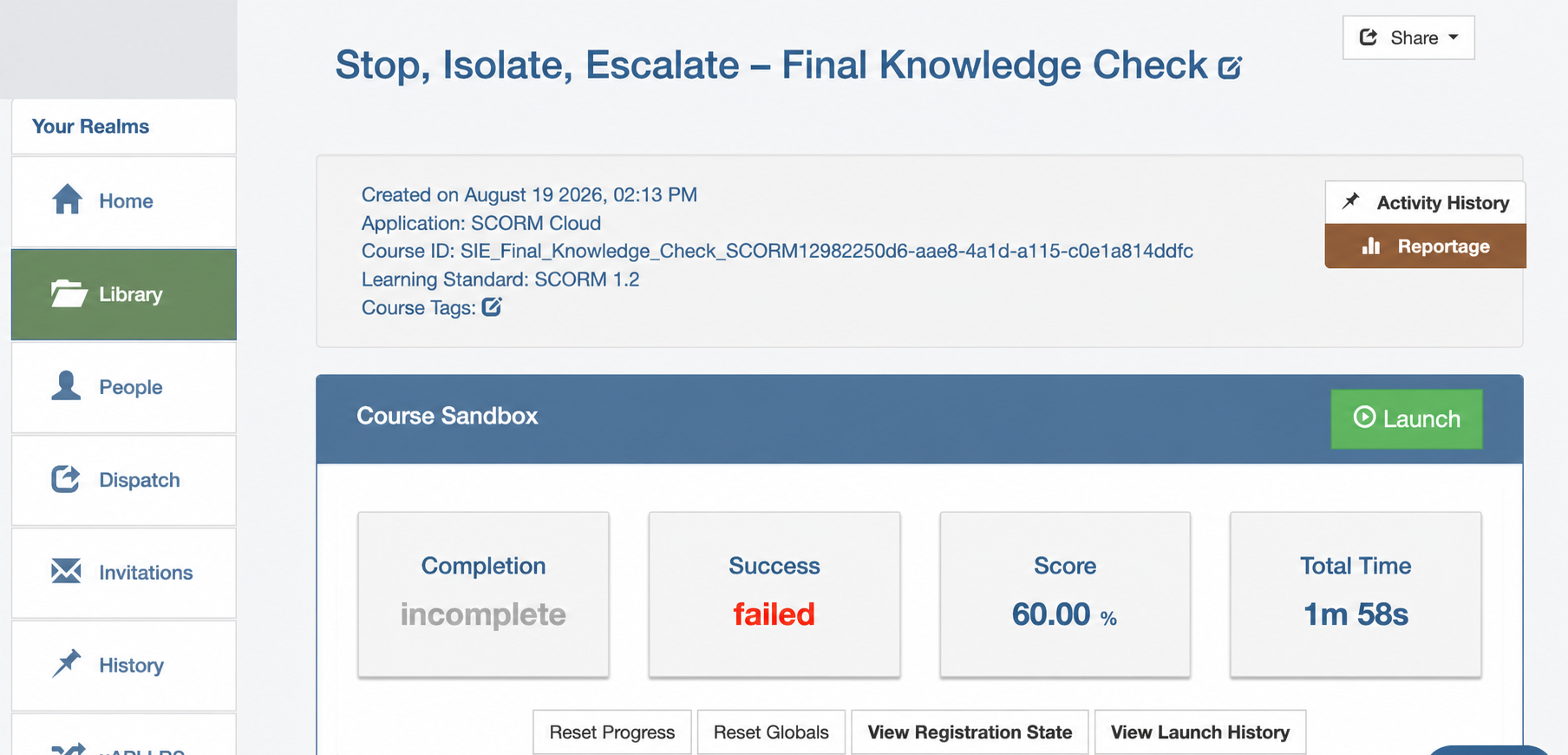
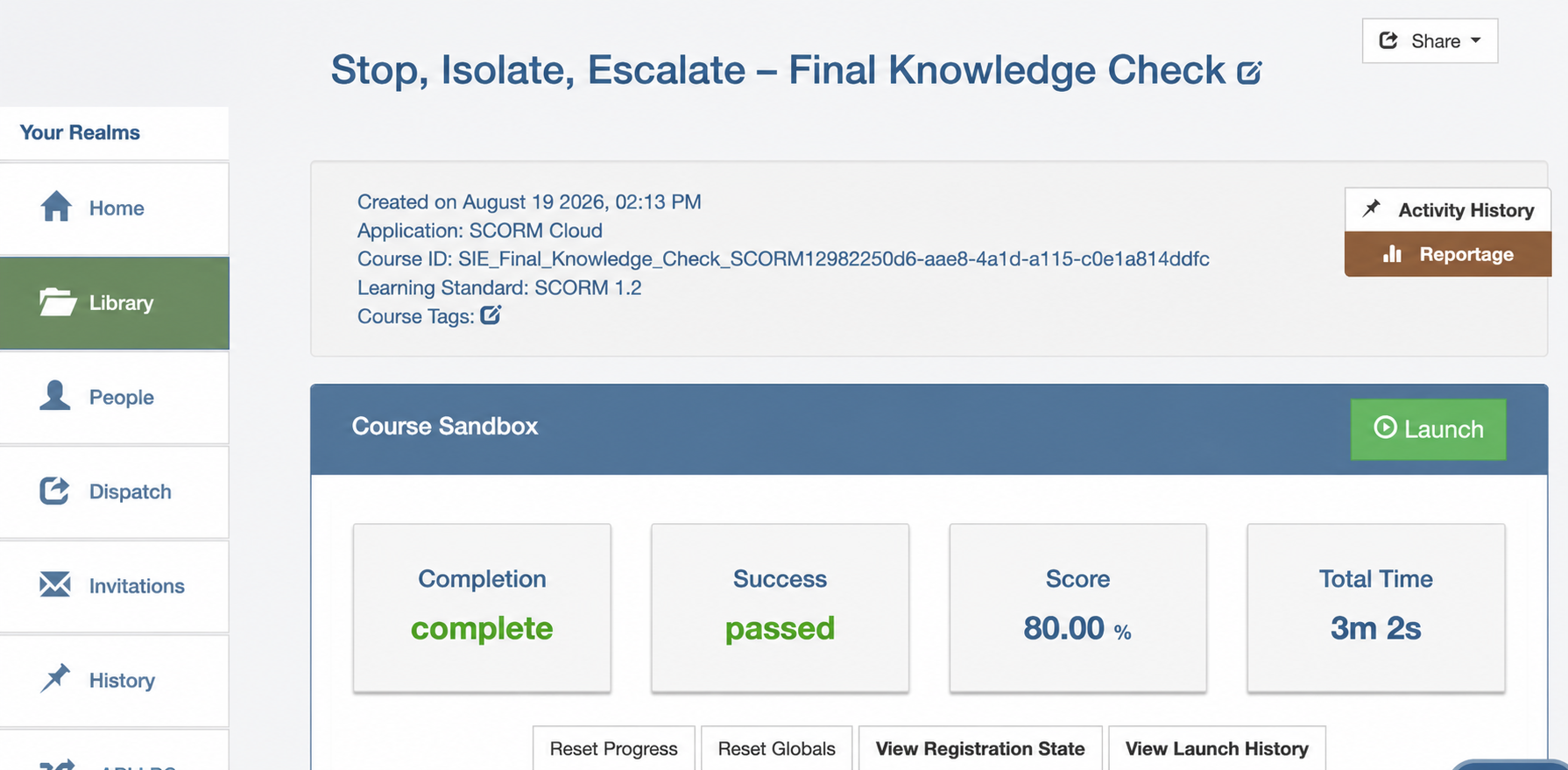
The separate Final Knowledge Check communicated score, completion, success and the configured threshold. Public copies have the account-identifying area redacted.

SCORM Cloud evidence showing Completion incomplete, Success failed and Score 60.00 percent for the Final Knowledge Check
Attempt 0160% · incomplete · failedBelow the 80% mastery threshold
SCORM Cloud evidence showing Completion complete, Success passed and Score 80.00 percent for the Final Knowledge Check
Attempt 0280% · complete · passedMeets the configured mastery threshold
Final assessment tracking verified.

A 60% attempt reported as incomplete and failed; an 80% attempt reported as complete and passed. The main branching scenario exported and launched successfully as SCORM 1.2, but this case study does not claim that its completion tracking was verified.

03 · Design story

From role research to a testable learning product.

This was a portfolio response to publicly available role and course context—not an internal organisational needs analysis. Four decisions connect the opportunity, topic, learning blocks and LMS evaluation.

  1. 01

    Research the opportunity

    I reviewed the advertised role and AsureQuality Academy’s public offering. The role called for end-to-end digital learning delivery, contemporary learning technology, Canvas-aligned thinking and continuous improvement.

  2. 02

    Choose a useful gap

    A generic Food Safety Essentials topic would overlap an existing product area. I selected one high-consequence behaviour: what a worker should do when they notice a possible allergen cross-contact or labelling incident.

  3. 03

    Define the learning blocks

    I shaped a 12–15 minute mobile-first journey: recognise the risk, make a decision, see the consequence, practise Stop–Isolate–Escalate, record essential details, complete a separate final check and take a job aid to work.

  4. 04

    Evaluate through a Canvas lens

    I mapped the sequence to Modules, Pages, Assignments, Quizzes, Requirements, Gradebook and Analytics to test whether the progression, evidence and improvement loop would make sense in a real LMS.

Canvas-aligned evaluation lens

Canvas is the design check—not an implementation claim.

The prototype was not built or administered in Canvas. I used Canvas concepts to evaluate whether the learning sequence, assessment evidence and improvement plan could translate into a coherent course architecture.

StructureModules + Requirements

Would each activity unlock in a logical order, while support and accessibility information remain easy to reach?

EvidenceAssignments + Quizzes + Gradebook

Does each performance objective produce visible evidence, and is the 80% mastery decision clear?

ImproveQuiz analysis + Analytics

Could a course owner identify persistent misconceptions, friction or completion gaps and act on them?

Optional implementation detail

Canvas Implementation Blueprint

For reviewers who want the proposed module structure, completion logic, evidence register and analytics plan.

Download blueprint

04 · Improvement plan

What I would test next.

The next stage is not more content. It is targeted validation with the people, devices and delivery environment that would determine whether the product is ready to use.

01

Validate the workplace response

Review the scenario, feedback and job aid with an authorised food-safety subject-matter expert before operational use.

02

Test with representative learners

Observe new employees on mobile and desktop, then simplify any choice, instruction or navigation point that causes avoidable hesitation.

03

Complete accessibility QA

Run keyboard, screen-reader, zoom, contrast, alternative-text and mobile reflow checks across the exported H5P and standalone HTML.

04

Pilot, measure and iterate

In an authenticated LMS pilot, validate completion rules, resume behaviour and reporting; then use item patterns and learner feedback to prioritise revisions. Explore xAPI only where richer interaction evidence adds value.

Responsible production

AI-assisted tools supported drafting, critique, code and the assessment cover illustration. Food-safety claims, assessment decisions and release approval remain subject to human and authorised SME review.

Evidence boundary

No live learner analytics, Canvas build or Canvas administration is claimed. Future results would be labelled as real, simulated or proposed at the point of use.